


Key Takeaways
- Dental bonding shapes tooth-coloured resin onto your tooth, often in one visit, with little to no enamel removed.
- Veneers can be made from porcelain or composite resin, and the number of visits depends on the material.
- Dental bonding and composite veneers may last around 5 to 7 years, while porcelain veneers often last about 10 to 15 years with good care.
- Bonding costs less upfront, while porcelain veneers may offer longer-lasting value.
- The right choice depends on the chip, your bite, and your tooth health.
A small chip can catch your eye every time you smile in the mirror. Maybe you feel a rough edge with your tongue, or the front of your tooth just looks a little off. Either way, you want it fixed without a lot of fuss, and the team at Markham Dental Smiles can help.
Bonding is often the quicker, budget-friendly pick for a single small chip, while porcelain veneers may be worth considering when you want a longer-lasting result or have chips plus stains, gaps, or uneven edges.
What Small Chips Mean for Your Smile
A chip can change how your smile looks and how your tooth feels. A sharp edge might rub against your lip or tongue, and it can make you self-conscious in photos.
Some chips are tiny and only cosmetic. Others reach a point where the tooth feels sensitive or the edge keeps snagging. That is a good time to have the team take a look.
A quick assessment can help you understand whether the chip needs repair and which options fit.
Dental Bonding & Veneers Explained
How Dental Bonding Works
Bonding uses a tooth-coloured resin that the dentist shapes right onto your tooth. The colour is matched so it blends with the teeth around it.
The dentist can often finish the whole thing in one visit. Little to no enamel is removed, so it stays a gentle option.
How Veneers Work
Porcelain veneers are thin, custom shells made to fit your tooth. They cover the front surface to reshape the look of your smile.
Porcelain veneers usually involve more than one visit. One appointment prepares the tooth and takes an impression, and another places the finished shell. Composite veneers can often be completed in one visit.
Key Differences Between Bonding & Veneers
Durability & Lifespan
Dental bonding and composite veneers may last around 5 to 7 years, while porcelain veneers often last about 10 to 15 years.
Both need care and protection to reach those numbers. How you treat them day to day makes a real difference.
Look & Stain Resistance
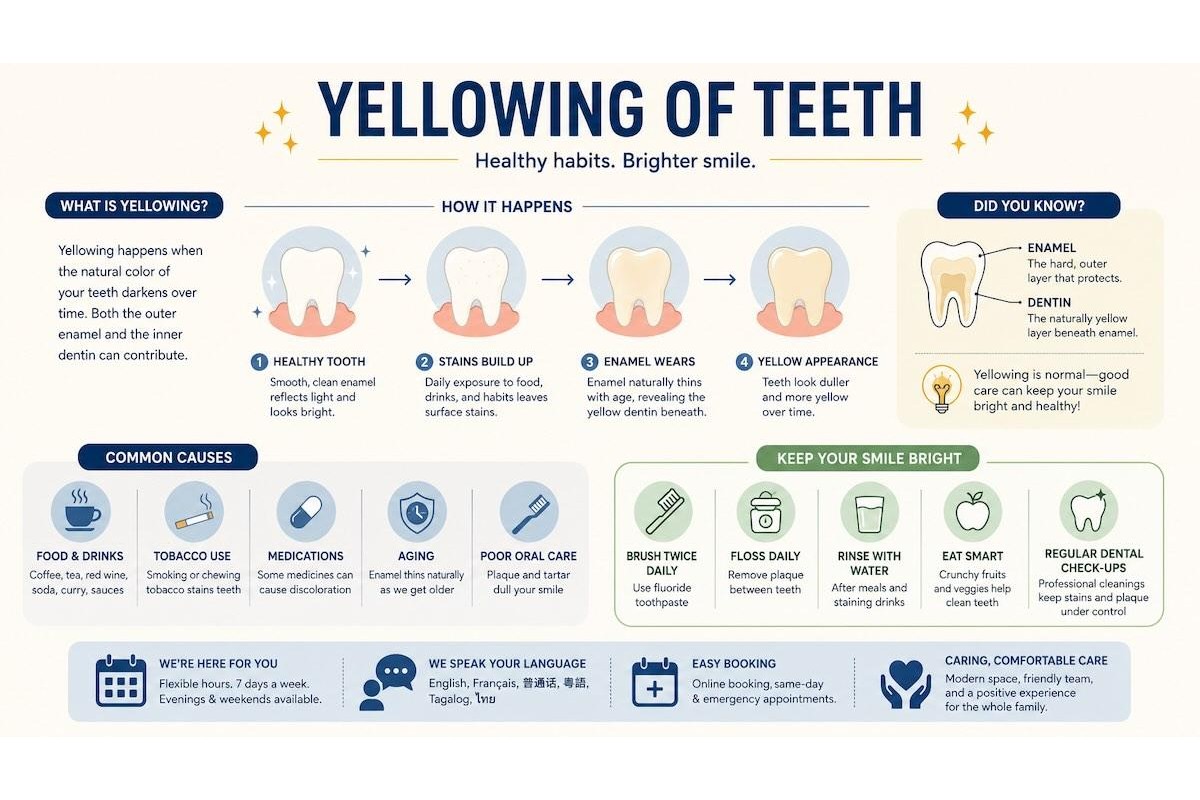
Porcelain veneers resist stains well and tend to hold their colour over time. Composite veneers and bonding can discolour as the years go by, especially with coffee or tea.
When either one is done well, it blends naturally with your other teeth.
Cost & Long-Term Value
Bonding costs less upfront, which makes it an easy choice for a small fix. Porcelain veneers typically require a larger investment at the start but may offer longer-lasting value.
Try to think beyond the day-one price. The option that lasts longer can be worth more over time.
How to Choose the Right Fit for You
When Bonding Makes Sense
Bonding is a good match for a small, single chip on an otherwise healthy tooth. It works well when you want a quick, budget-friendly repair.
It is also a conservative, reversible option, so it leaves your natural tooth mostly untouched.
When Veneers Make Sense
Veneers help when you have more than one concern at the same time. Think chips along with stains, gaps, or uneven edges.
If you want a longer-lasting result on a front tooth, porcelain veneers may be an option.
What the Dentist Checks First
Before either treatment, the dentist looks at a few things to guide the plan.
- The size and location of the chip.
- Your bite, plus any grinding or clenching habits.
- The overall health of the tooth.
Care Tips & Final Considerations
How to Care for Both
A few simple habits help your bonding or veneers hold up.
- Skip biting ice or your nails.
- Limit staining foods and drinks like coffee, tea, and red wine.
- Keep up with regular cleanings.
A Few Final Considerations
Bonding tends to fix small chips well. For larger damage, the dentist may suggest another option.
Not every small chip needs repair, but it helps to have one checked so you know your choices. Some people start with bonding and later consider veneers if their needs change.
Ready to smooth out that chip and feel good about your smile again? Book a visit with our team at Markham Dental Smiles in Unionville for a treatment plan built around your teeth.