


Key Takeaways
- Gums don’t regrow on their own, so skip products marketed as gum regrowth.
- Hard brushing, gum disease, grinding, and tobacco use can pull gums away.
- Longer-looking teeth and sensitivity are common early signs.
- Deep cleanings and alignment address the causes, while bonding and gum grafts can cover exposed roots.
- A soft brush and regular checkups help keep recession from spreading.
You run your tongue along your teeth and notice they feel a little longer than they used to. A sip of cold water sends a quick zing through one spot. If your gums seem to be pulling away, the team at Markham Dental Smiles hears that concern often, and you’re probably wondering whether they can bounce back on their own.
Gum tissue can’t grow back once it pulls away, but a dentist can help cover exposed roots and stop the recession from getting worse.
The Honest Answer About Gum Regrowth
Once gum tissue moves away from a tooth, it stays put. It won’t fill back in like a cut on your skin heals over.
You may see toothpastes or supplements that promise to bring your gums back. Those claims don’t hold up, so save your money for something that helps. The good news is that a dentist can help cover exposed roots with a few different options, and that’s where real progress happens.
What Makes Your Gums Pull Away
Recession usually builds up slowly, and a handful of everyday habits are often behind it. Brushing too hard or scrubbing back and forth can wear tissue down over time. Gum disease and plaque buildup are another common cause.
Other factors add pressure too. Grinding your teeth, a bite that doesn’t line up, and tobacco use can all play a part in gums pulling back from your teeth.
Signs to Watch For
Recession can be easy to miss at first. Keep an eye out for these changes.
- Teeth that look longer than they used to.
- Sensitivity to hot, cold, or sweet foods and drinks.
- Sore spots or tooth roots that feel exposed.
Treatment Options for Gum Recession
The right approach depends on how far the recession has gone and what’s causing it. A Markham dentist can walk you through the choices and build a plan that fits your teeth.
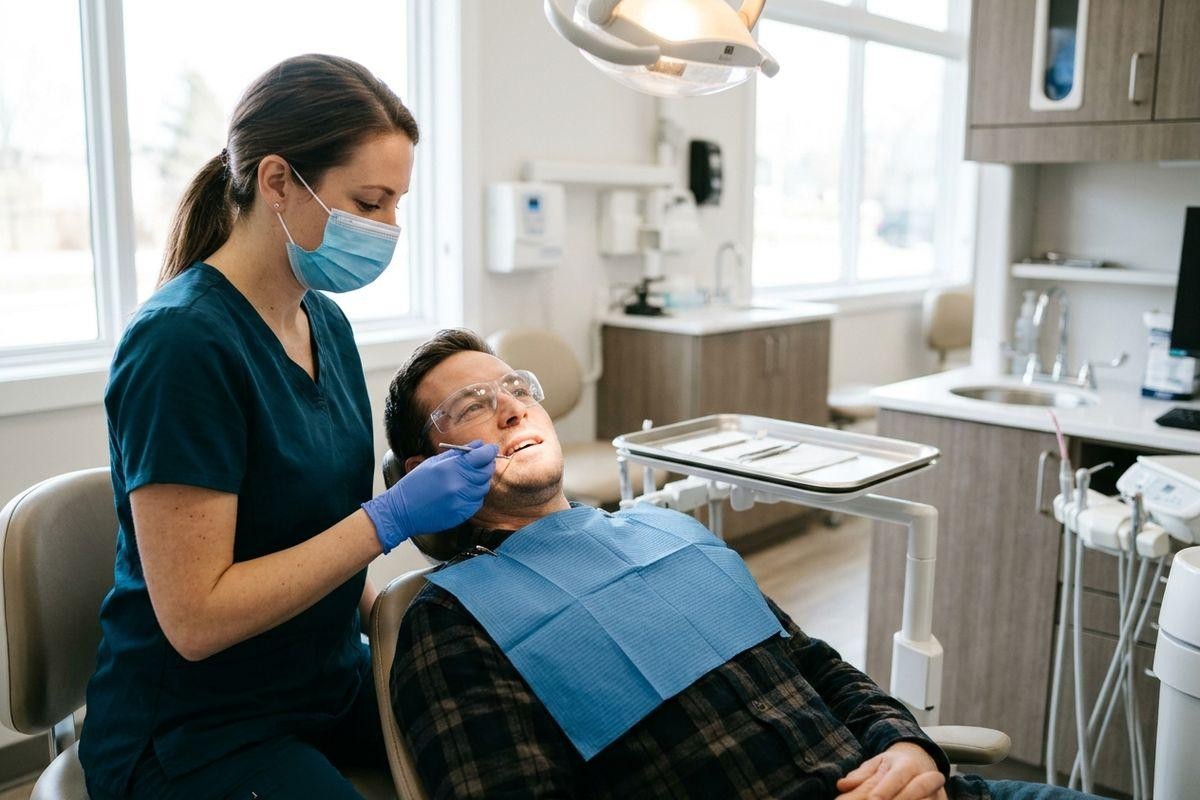
Nonsurgical Options
Milder cases often respond well without surgery. Deep cleanings can treat gum disease and clear plaque below the gumline. For ongoing gum disease, the team also offers Oravital, a treatment that targets the bacteria behind gum problems. Dental bonding can cover exposed roots and calm sensitivity.
If a crowded or crooked bite is adding stress, braces or Invisalign can shift your teeth into better alignment and take pressure off your gums.
Gum Graft Surgery
When recession is more advanced, a gum graft can cover the roots. Tissue is moved to the area that needs coverage, and recovery usually takes around two weeks. If you need this kind of care, the team can arrange a referral to a gum specialist so you’re in steady hands the whole way through.
When Gum Recession Needs Attention
Some recession moves slowly and simply needs watching at your regular visits. Your hygienist can track whether it’s progressing from one checkup to the next.
Other times, it calls for a closer look sooner. Reach out if you notice any of these.
- Root decay or food that keeps getting trapped along the gumline.
- Sudden swelling around a tooth.
- Bleeding that doesn’t settle down.
How to Slow Gum Recession
Small changes at home can go a long way toward protecting the gum tissue you still have. Switch to a soft-bristled brush and use a gentle touch instead of a hard scrub.
A desensitizing toothpaste can ease the sting from exposed roots. If you grind at night, a custom night guard can shield your teeth while you sleep. Regular checkups round it out, giving your hygienist the chance to catch changes early and keep your routine on track.
If your gums have been on your mind, the friendly team at Markham Dental Smiles can take a look, explain what they see in plain language, and map out a treatment plan that suits you. Book your visit with the Markham dentists in Unionville today, with care in English, Cantonese, or Mandarin, and take the first step toward comfortable, healthy gums.